

Before the internet really took off around 2000, access to music was limited.
It started at the record label level. Without a contract, it was nearly impossible to distribute music. Even if you did, your music was played through other filters such as radio, music video channels, record stores, and music magazines. All the while, you were competing with all the other new songs out there, along with your old favorites.
It was hard to get public attention. It was even harder to get them to part with their limited disposable income to buy your music.
But because the initial supply was so small and the selection process so rigorous, rewards awaited the lucky few who emerged from the other side of the star-making machine system. We lived in a monoculture, driven primarily by radio broadcasts. Back then, we had a general idea of what other people were listening to. Music fans were connected by a common musical vocabulary and the need to know that there were others with similar musical tastes. And because the most famous songs were so ubiquitous, we couldn't help but learn the lyrics even to songs we didn't like.
Being a mainstream artist means being big. Michael Jackson, Madonna, AC/DC, Eagles. If you stop a stranger on the street and name three songs by these artists, you will get three correct answers.
But today we all live in separate, very personal music bubbles, and we love it that way. It's so empowering to have our own little special niche, customized for us. Thanks to streaming, there are no more “mainstream” music fans. We are all unique and have our own opinions on what kind of music is “good.”
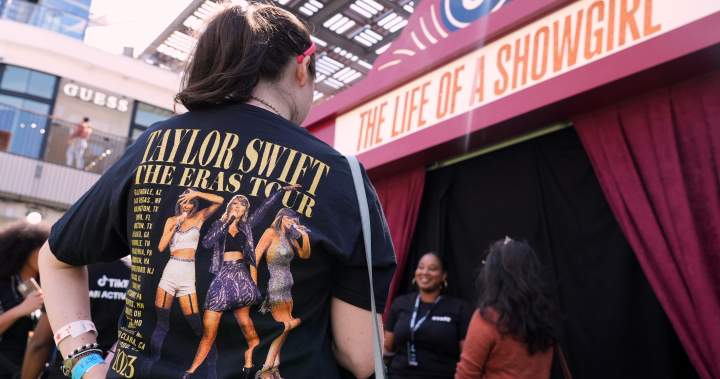
Even for someone as big as Taylor Swift, her songs haven't achieved the ubiquity they had before 2000. If you want to try it out, ask a stranger to name three Tay-Tay songs. If a person does not choose Swiftie, he or she will have a hard time. I work in the music industry 24/7 with all types of music, and I have a problem.

Another example: What was the song of the summer 2025? What song was on everyone's mind in June, July, and August? For the first time in years, there was no clear winner. This highlights the fact that we have moved beyond big-name artists releasing blockbuster hits for the masses. There are far fewer hit songs today than there were in the past. This is because the same number of people can no longer come to a consensus on what we should all listen to. The shared experience of songs and artists is far from what it once was.
Radio is still popular, but it's not as dominant as it once was when it comes to communicating information about songs and artists. My music video channel has disappeared. When was the last time you bought a physical music magazine? And how many regular people visit a record store on a regular basis because there's a hot new release that everyone says is a must-have? Instead, we have streaming algorithms that automatically and continuously provide an endless parade of songs that individual music fans think they'll like. There are no “everyone” anymore. It's just “me”.
Entertainment Details More Videos
The music industry is struggling to redefine “mass appeal.” And it's not just radio airplay, streaming numbers, and record sales. In today's music business, hits can be created beyond what was once defined as the mainstream. In fact, you'd be surprised to learn how much an act contributes solely to the community.

Get the latest national news
For news impacting Canada and around the world, sign up for breaking news and have it delivered directly to you as it happens.
Take My Chemical Romance, for example. When they announced their reunion tour, I was surprised that they were booked to play stadiums. Stadium? What about an emo band that has been disbanded for years and whose reunion has been postponed due to COVID-19? However, over a 30-day period this summer, the show drew an average of 42,797 people per performance, a 100% sell-out rate. Are you surprised? I was.
current trends

Russian snipers are using Canadian rifles despite sanctions

'General strike if necessary': Alberta unions announce intent to bring down UCP government
And then there's the Lumineers, the ho-hey band that became a Family Guy meme. During the same three-day period, they played seven sold-out arena shows, selling an average of 18,430 tickets per show and an average box office gross of nearly $2 million per show.
Here are some other recent numbers from Pollstar, the bible of the touring music industry. Are any of these artists “mainstream” in the old sense of the word?
ENHYPHEN: 98% sell-through rate for 8 shows, average of 20,329 tickets per gig, average gross sales of USD 2.9 million. Rufus Du Sol: 96% sales rate in 9 performances, average of 18,197 tickets per gig, average gross sales of USD 1.65 million. Phil Wickman/Brandon Lake: 100% sell-through for 6 performances, average gross sales of USD 2.9 million, 15,733 tickets per gig, average gross sales of USD 889,512. Anuel AA: 85% sold for 8 shows, averaging 13,794 tickets per gig and average gross sales of USD 1.2 million.
Even Creed, one of the most derided bands of the past quarter century, has sold out shows, with an average attendance of 11,000. Nearly $1 million in one night.
Let me be clear: what I am saying is not the nonsense of an old man nostalgic for the past. I'm just pointing out the difference between how the music world used to be and what it has become.
While major labels have yet to figure out how to deal with this new world, opportunities abound for indie labels. Songs and artists are born online through streamers and social media, and ultimately find an audience on an individual basis. Eventually enough groups will come together to form a community of artists, and the community will be large but largely invisible to others.
Another paradigm is to create a following of superfans. If you could convince just 3,000 people to pay $10 a month for all kinds of exclusive access and special privileges, that would be $360,000 a year. It's not bad.
Now, if you'll excuse me, I have to listen to Jenny Beth's new album, You Heartbreak You. That's wonderful. Everyone has heard it, or at least they should.
Curator's Recommendations

Home Editor's Favorite: Must-have gifts

Top 10 Mejuri Items Every Woman Needs in 2025
© 2025 Global News, a division of Corus Entertainment Inc.