

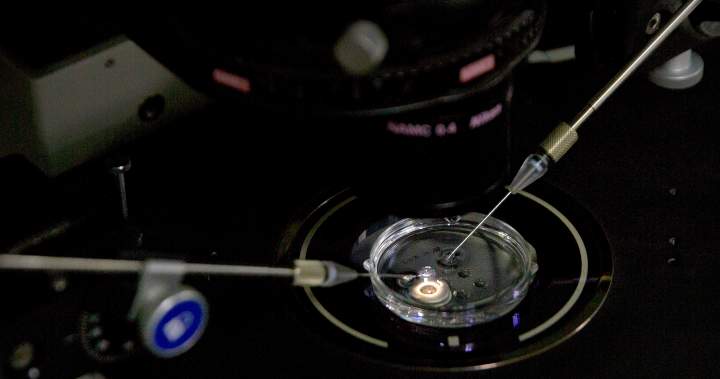
Sperm from donors who unknowingly carried cancer genes has been used to impregnate around 200 babies in Europe, according to an investigation by the BBC, 14 other public news organizations and members of the European Broadcasting Union's Investigative Reporting Network.
Some children with donor fathers have already died, and only a small number of people who inherit the gene will be protected from cancer throughout their lives, British news outlets reported.
The sperm was not used in the UK, but a small number of British families who underwent fertility treatment in Denmark used donors.
The European Sperm Bank in Denmark, which sold the sperm, said its “deepest sympathies” were with the affected families, adding that in some countries the sperm had been used to conceive an excessive number of babies.

The sperm belonged to an anonymous man who was a 17-year-old student in 2005 and received a donation. His sperm was used for about 17 years.
The man was healthy and in good health at the time of donation. Although he passed the screening tests required to donate, some of his cells' DNA mutated before he was born, damaging the TP53 gene, which plays a key role in preventing the spread of cancer cells.
World Details More Videos
The study found that while most donor bodies do not contain the damaged gene, up to 20 percent of the sperm contain the damaged gene.

Get weekly health news
Get the latest medical news and health information every Sunday.
Babies conceived from affected sperm will carry the mutation in every cell in their body and suffer from a genetic disorder known as Li-Fraumeni syndrome. This greatly increases the chance of developing cancer during their lifetime, including childhood cancers such as brain tumors and leukemia.
“This is a frightening diagnosis,” Professor Claire Turnbull, a cancer geneticist at the London Institute of Cancer Research, told the BBC. “This diagnosis is very difficult to apply to a family. There's a lifelong burden of living with that risk, and it's obviously devastating.”
Studies show that people with Li-Fraumeni syndrome have a 90 percent chance of developing cancer and must have annual MRI scans and ultrasounds for the rest of their lives. Women with this mutation may also choose to have a double mastectomy to reduce their risk of developing breast cancer.
The European Sperm Bank explained that this type of mutation is “not detected proactively in genetic screening” and that donor sperm was removed from circulation after the mutation was discovered.
Doctors who treat children with cancers linked to sperm donation raised their concerns at the European Society of Human Genetics this year.
They reported finding 23 children with the mutation out of 67 children known to have been born to donors at the time. Ten of the 67 patients had already been diagnosed with cancer.
current trends

Bank of Canada says “prices are not going down'' after leaving interest rates unchanged

FBI investigating 73-year-old woman wanted in $30 million bank fraud case
The investigation found that at least 197 children were born using donor sperm.
“There are many children who have already developed cancer,” French cancer geneticist Dr. Edwige Kaspar, who first submitted the data, told the study.
“There are children who have already developed two different cancers, and some of them have already died at a very early age,” she added.
Parents of children conceived using donors have been contacted by the clinic and encouraged to have their children tested.
67 fertility clinics in 14 countries used donor sperm.
There is no single law capping the number of times a donor's sperm can be used, but each country has its own limits, which were violated in this case.
In Belgium, sperm donors are only available to six families. Instead, 38 women gave birth to 53 donor-born children, according to the report.
In Canada, there is no federal limit on the number of families that can use a single sperm donor, but clinics and provinces can set their own rules.
For example, the Quebec Sperm Bank limits donors to 10 families.
According to the Canada Infertility Act, Ontario has no legal restrictions, but similar to British Columbia and Alberta, there are laws exempting parents from donor liability for a conceived child.
According to guidelines from the American Society of Reproductive Medicine, sperm donors should limit offspring to 20 to 25 offspring per donor to reduce the risk of mutations and incest.
Global News reached out to Health Canada and the Office of the Minister of Health for more information about sperm testing and screening in Canada.
© 2025 Global News, a division of Corus Entertainment Inc.