

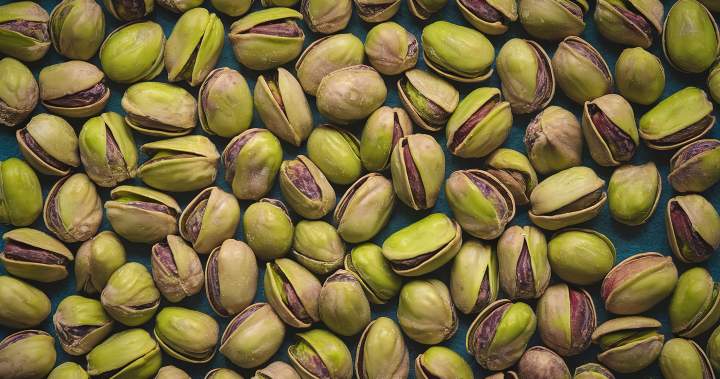
An outbreak linked to some brands of pistachios and pistachio-containing products from Iran has led to more people becoming sick with salmonella and new restrictions on salmonella imports.
The Public Health Agency of Canada announced that as of Dec. 2, there were 155 laboratory-confirmed cases of salmonella in six provinces, with the majority in Ontario and Quebec.
Infections have also been confirmed in British Columbia, Alberta, Manitoba and New Brunswick.
The disease affects people between the ages of 1 and 95, with 70% of cases being women and a total of 24 people hospitalized.
“We are looking at quite a number of illnesses associated with this event,” said April Heksemer, PHAC's director of outbreak management. “This is an alarming event, which is why we have issued this new advisory. We are working hard to get it under control and end it.”

The number of illnesses has increased since PHAC's last report on October 21, when there were 117 confirmed cases and 17 hospitalizations.
According to PHAC, people became ill between early March and mid-November 2025.
The agency said many people who became ill reported eating pistachios or products containing pistachios.
Different Salmonella strains during the outbreak were detected in recalled pistachio samples and recalled Dubai Style chocolate samples.
“It seems a bit niche, but the problem is when we go out and buy a quick snack, we might be drawn to baked goods that have pistachios on them, but we have no way of knowing where those pistachios came from,” she said. “We have no idea how many Iranian pistachios we consume on a daily basis.”
Iranian pistachios face further regulations
The recall, part of an ongoing food safety investigation by the Canadian Food Inspection Agency (CFIA), began on July 24 for Habibi brand pistachio grains.

Get weekly health news
Get the latest medical news and health information every Sunday.
The CFIA confirmed to Global News last week that the pistachios involved in the recall were imported from Iran, but did not say whether they came from a specific crop.
At the end of September, as a result of its investigation, the CFIA announced that it would temporarily restrict imports of pistachios and pistachio-containing products from Iran as a precautionary measure.
The agency announced further measures Tuesday, requiring all federally licensed importers and manufacturers of Iranian pistachios imported before Sept. 27 to store them and test them for salmonella before selling them in Canada.
The new measures include products made with Iranian pistachios that have not yet been recalled.

Don't know where it comes from? Please avoid
Heksemer told Global News that authorities recognize that determining the origin of pistachios can be “very difficult” because pistachios can be purchased in bulk and repackaged throughout the distribution chain.
“We have followed this recommendation that if we can confirm that the country of origin is not Iran, it is not affected and is not part of this outbreak or series of recalls,” she said. “If the country of origin is unknown, cannot be determined, or the label indicates Iran, we urge people to avoid those products to prevent the risk of salmonella infection.”
current trends

Crown Royal maker union reaches agreement to close Ontario plant

Air Transat pilots overwhelmingly vote in favor of strike order
He also said people should be careful if they keep contaminated products in their kitchens or in their lunch bags, as cross-contamination is possible.
This includes cooking, and Heksemer warned people not to cook with the recalled substances, saying baking or cooking does not always kill salmonella in pistachios.
Recalls continue to increase
Multiple product recalls have occurred in the last month alone, with 151 listed between November 12th and December 2nd. In fact, 65 products were recalled between November 25th and Tuesday.
The CFIA said the recalled products last month were distributed to all provinces except Prince Edward Island, and some products were also sold online. No regions were listed.
Some products recalled in the past few months date back to October 2024.
The CFIA noted in its study that pistachios have a long shelf life and can remain on the market for months.

Canadians are being asked to check if they have any recalled products, throw them away or return them if so, and contact their health care provider if they believe they have become ill after consuming a product.
Those who sell pistachios and products containing pistachios are encouraged to check to see if any of their products are subject to recalls and to ensure that they do not offer, sell, or distribute those products.
Food contaminated with Salmonella may not look or smell spoiled, but it can make you sick with a variety of symptoms, including fever, nausea, vomiting, abdominal pain, and diarrhea.
It can take a month or more for someone to get sick, see a doctor, get tested, and have the results confirmed, and PHAC said the illness reporting period for this outbreak is 12 to 99 days after onset of symptoms.
PHAC said researchers estimate that for every case of Salmonella reported to public health agencies, there are 26 more that go unreported.
Health Details More Videos
© 2025 Global News, a division of Corus Entertainment Inc.