

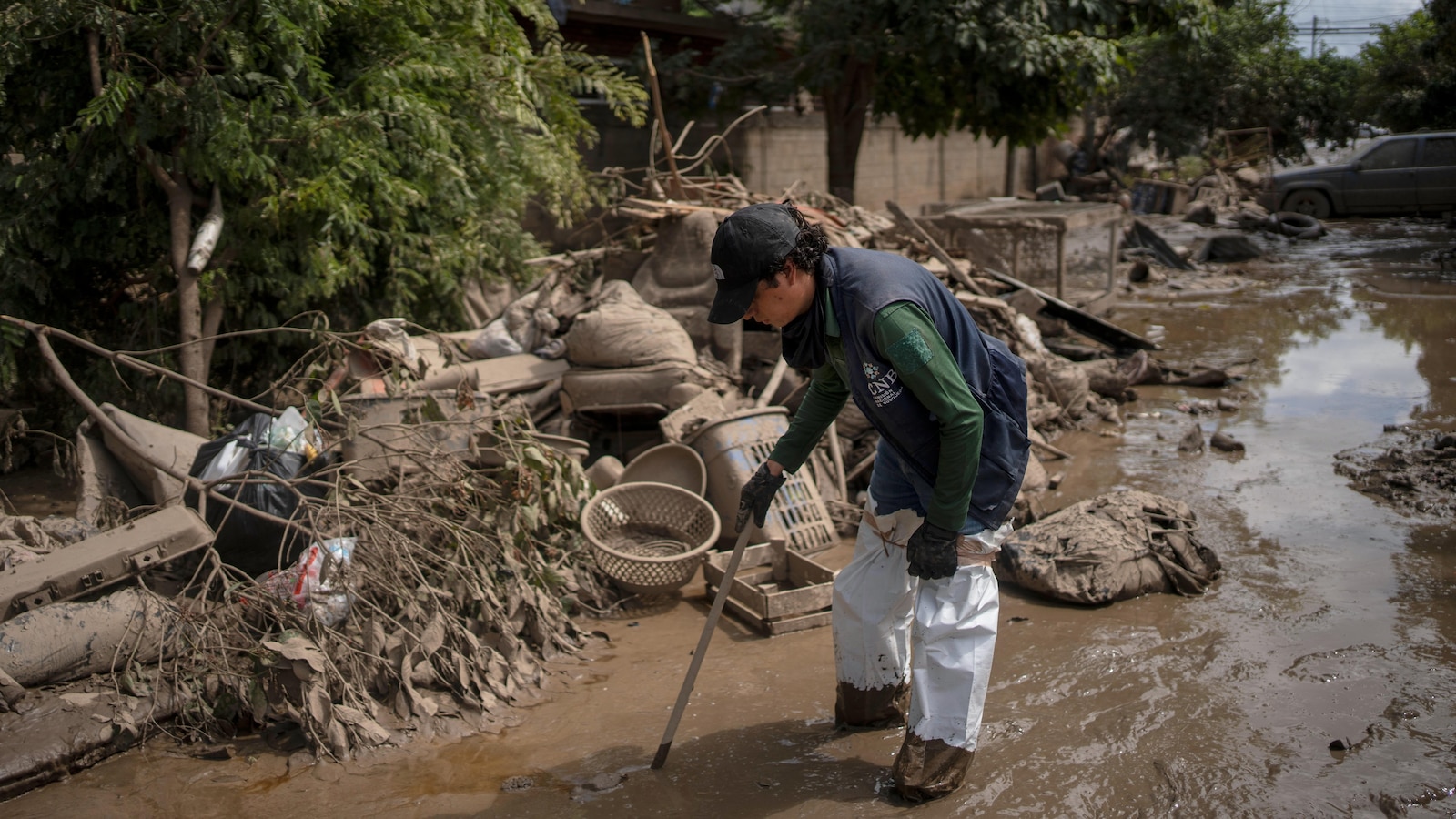
Poza Rica, Mexico — POZA RICA, Mexico (AP) – The stench of rot spread for miles around Poza Rica on Wednesday. Poza Rica was one of the areas hardest hit by last week's heavy rains that flooded central and eastern Mexico.
In the heart of this oil-producing city near the Gulf of Mexico, dust hung over the main streets where soldiers worked tirelessly. Further east, near the Cazones River, which flooded on Friday, some roads still lie under 3 feet (1 meter) of water and mud, with another 6 feet (2 meters) of trash, furniture and debris piled on top.
“After a week, it's getting worse. It's getting worse. We can't even cross the road,” lamented Ana Luz Saucedo, who fled with her children as the water rushed in “like an ocean.”
Now she is afraid of infection. She said that in addition to the trash and mud, there are bodies near the house that have yet to be recovered. “The body has already begun to decompose and no one is coming to collect it.”
More damage from last week's devastating rains, floods and landslides continues to emerge as the Mexican government rushes rescue and recovery efforts.
As of Wednesday, the government had recorded 66 deaths and the number of missing had risen to 75. Nearly 200 communities remain cut off, most in the central mountainous region of Hidalgo state, where helicopters are struggling to reach as cloud cover continues.
Officials blamed the disaster on the convergence of several weather systems – two tropical systems, a cold front and a warm front – which hit just as a particularly heavy rainy season was ending, saturated the rivers and weakened the hillsides.
But residents like Saucedo believe the warning came too late, at least in Poza Rica.
“A lot of people died because they didn't warn us. In fact, they didn't warn us,” she said. “They only came when the river was already flooded so people could evacuate, not before.”
Mexico's President Claudia Sheinbaum said this week that warning systems for such disasters do not work in the same way as they do for hurricanes. However, she acknowledged that once the emergency phase ends, authorities will need to review the river's maintenance and emergency procedures to determine “what worked, what needs to be improved, and whether there are better warning mechanisms.”
Emergency deployments of soldiers, Marines, and civilian teams continued in the hardest-hit states, with support from hundreds of volunteers.
In Poza Rica, for example, a group of women from the port city of Veracruz distributed clothing and 1,000 tamales they had set aside for flood victims.
Meanwhile, authorities are restoring access to dozens of closed roads and restoring power, as well as monitoring dams, many of which are now at maximum capacity.
____
Follow AP's coverage of Latin America and the Caribbean at https://apnews.com/hub/latin-america.