

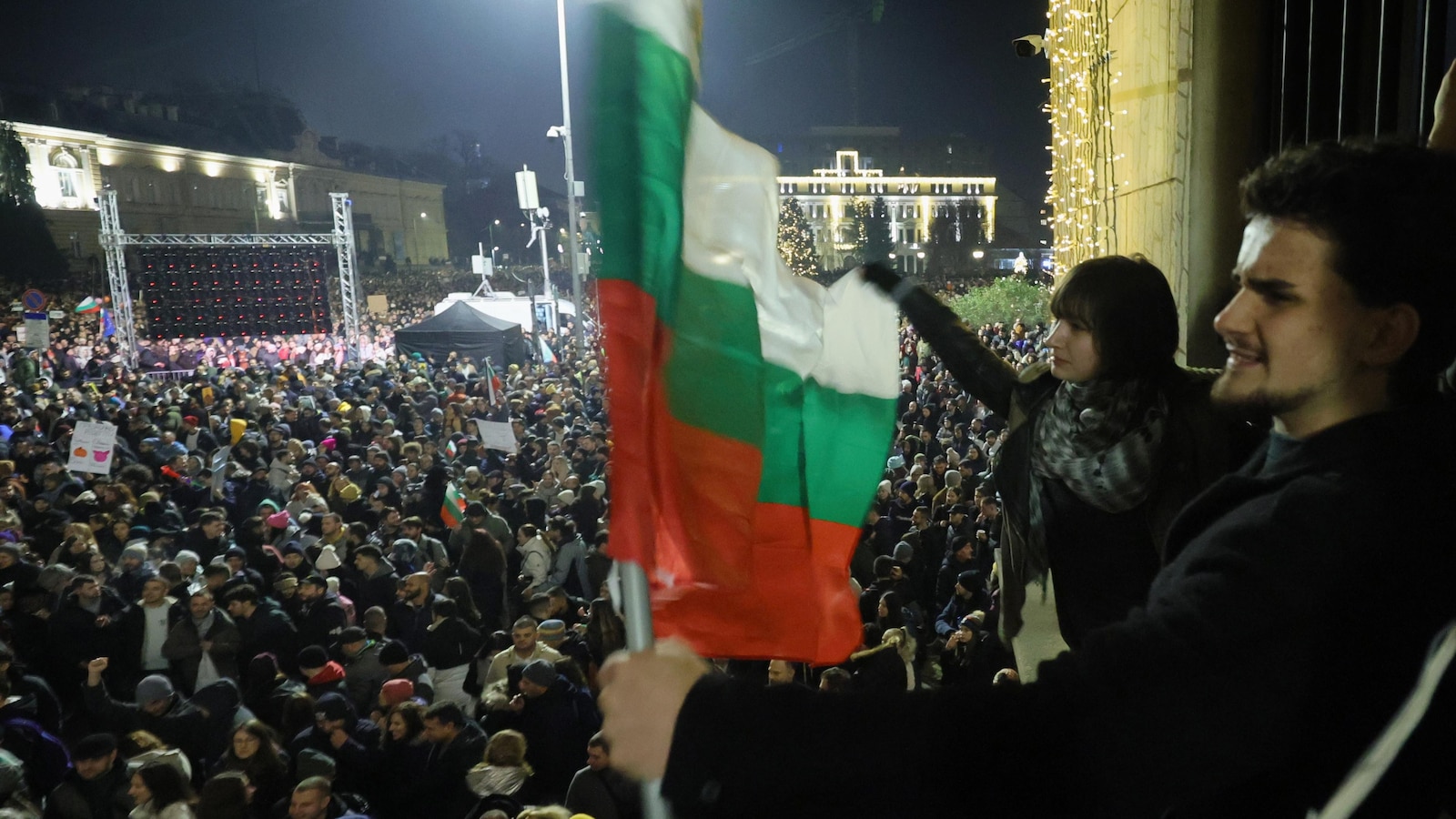
Sofia, Bulgaria — Tens of thousands of people took part in the latest mass protests across Bulgaria on Wednesday, denouncing widespread government corruption and highlighting political rifts just weeks before the country joins European nations that use the euro as their official currency early next year.
The demonstrations followed last week's protests sparked by the government's proposed budget, which calls for higher taxes, higher social security contributions and increased spending. The government later withdrew its controversial 2026 budget proposal.
Demonstrators' demands have since expanded to include calls for Prime Minister Rosen Zhelyaskov's centre-right government to resign.
In the capital, Sofia, protesters gathered in the central square, where the parliament, government and presidential buildings are located. They called for Prime Minister Zhelyaskov's minority coalition government to resign, chanting “resign” and “mafia.”
Students from Sofia's universities also took part in the protest, which organizers said exceeded last week's rally, which drew more than 50,000 people. Media estimates, based on drone footage, put the number of protesters at more than 100,000.
At the heart of protesters' complaints is the role of Bulgarian politician and oligarch Derian Peevski, who has been sanctioned by both the United States and Britain and whose party, MRF New Beginning, supports the government. Peevsky has been accused by opponents of helping shape government policy in line with the interests of the oligarchy.
No violence was reported and the protest ended peacefully.
Also on Wednesday, the opposition coalition We Continue the Change – Democratic Bulgaria called for a vote of no confidence in the government. A vote on the opposition's sixth motion will take place on Thursday.
Bulgarian President Rumen Radev wrote on Facebook that Wednesday's demonstration was effectively a vote of “no confidence in the cabinet.”
Mr Radev, who is from the political left and opposes the government, urged MPs to listen to the people during Thursday's vote and “choose between the dignity of a free vote and the shame of dependence”.
Bulgaria will soon become the 21st member state of the Eurozone, the European Union's flagship project aimed at deepening relations between member states. The Balkan country of 6.4 million people is set to switch from its currency, the lev, to the euro on January 1.