

 Reuters
The White House confirmed that U.S. Special Envoy Steve Witkoff will meet and hold talks with Ukraine's National Security Council Chairman Rustem Umerov in Miami on Thursday.
The meeting came after Witkov spent nearly five hours with Russian President Vladimir Putin in Moscow on Tuesday, with the Kremlin saying there was “no compromise” on ending the war in Ukraine through negotiations.
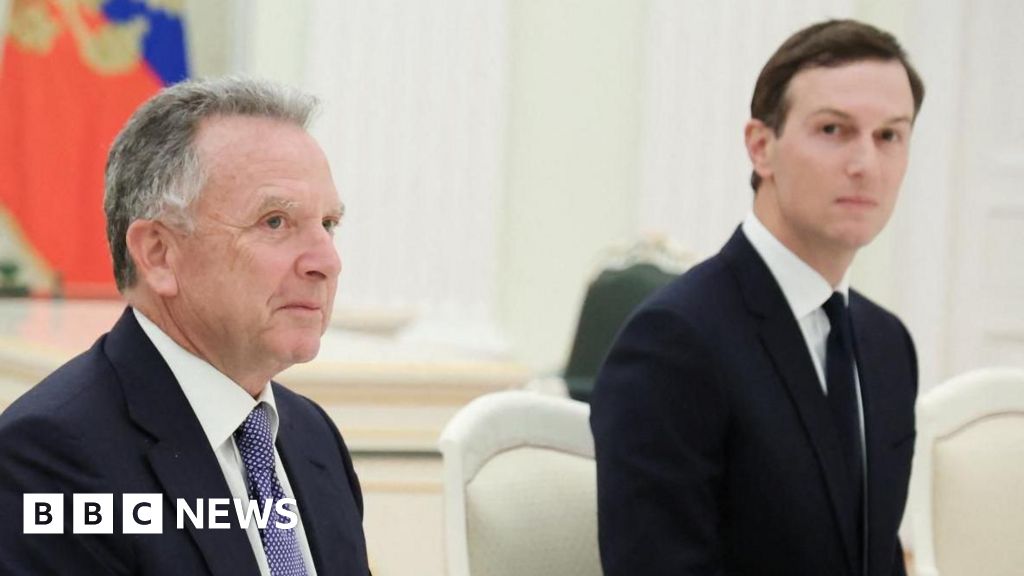
Trump said the meeting, which was also attended by his son-in-law Jared Kushner, was a “decent outcome,” but added it was too early to say what would happen because “it takes two to tango.”
Ukraine's Foreign Minister Andriy Sivya said Russia needed to “end the bloodshed” and accused Putin of “wasting the world's time.”
Asked by reporters whether Witkoff and Kushner thought Putin genuinely wanted to end the war, Trump said, “(Putin) really wants to end the war. That's their impression.”
President Zelenskiy said earlier Wednesday that talks between U.S. and Ukrainian negotiators would be held “within the next few days.”
“Today, the world clearly feels that there is a real opportunity to end the war,” President Zelenskyy said in a statement on X.
But he added that negotiations must be supported by “pressure on Russia.”
The U.S.-Russian talks in the Kremlin came after several days of U.S. talks with Ukrainian and European leaders after concerns were expressed that the draft peace deal was too biased toward Russian demands.
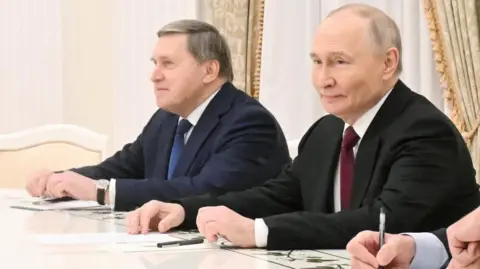
“Some of the US proposals seem more or less acceptable, but they need to be discussed further,” Ushakov said, adding that other proposals were openly criticized by Russian leaders.
Ushakov did not elaborate further, but at least two major issues remain between Moscow and Kiev: the fate of Ukrainian territory occupied by Russian forces and Ukraine's security.

 Reuters/Pool/Sputnik
Kiev and its European partners believe that even if a peace deal is reached, the most effective way to prevent a future Russian attack is to admit Ukraine to NATO.
Russia vehemently opposes such proposals, and President Trump has repeatedly stated that he has no intention of adding Kiev to the alliance.
The Kremlin said Wednesday that Ukraine's possible membership in NATO is an “important issue” to be addressed in Moscow.
Ushakov, Putin's senior foreign policy adviser, hinted that Russia's negotiating position had strengthened thanks to recent battlefield successes.
“It helped us better assess our foreign partners on the path to a peace settlement,” the Russian soldier said.
Ahead of the US visit to the Kremlin, President Putin was filmed wearing military uniform at a Russian command post, receiving briefings from commanders advocating the conquest of the strategic city of Pokrovsk in eastern Ukraine and other nearby villages.
Although fighting continues in Pokrovsk and Russian forces do not control the entire city, Russian officials clearly believe their message of military gain is getting through to the United States.
Russian forces have been making gradual advances in the east and appear to have stepped up operations in recent weeks. They captured about 701 square kilometers (270 square miles) of Ukrainian territory in November and now control 19.3% of Ukraine's territory, according to an AFP analysis of data from the US-based Institute for the Study of War (ISW).
The Kremlin said Wednesday that Putin was ready to continue talks with his American counterpart “as many times as necessary.”
But as relations between Russia and the United States become friendlier, the gulf between Moscow and Europe is widening.
Putin accused Europe of interfering in Russia-US relations, making demands that Russia cannot accept and obstructing the peace process. Shortly before meeting Witkov and Kushner, Putin told a forum in Moscow that he did not want a conflict with Europe but was “ready for war.”
 Reuters
British government officials rejected Putin's message as “another Kremlin claptrap by a president who is not serious about peace.”
NATO foreign ministers met in Brussels on Wednesday, and Secretary General Mark Rutte said he was positive that peace talks were taking place, but that Ukraine needed to be put in “the strongest position to continue the fight.”
EU member states have reached an agreement with MEPs to make Europe completely independent of Russian gas by the end of 2027.
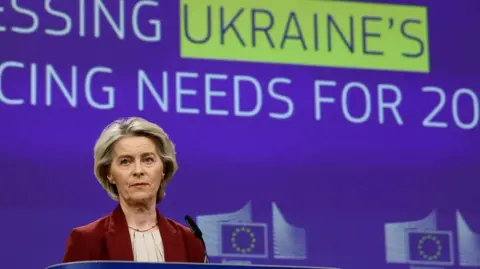
European Commission President Ursula von der Leyen welcomed “the dawn of a new era” under the agreement, which means long-term contracts for gas pipelines with Russia will be banned from September 2027, and long-term contracts for liquefied natural gas will also be banned from January 2027.
“We have chosen energy security and independence for Europe. No more blackmail, no more market manipulation by President Putin. We will take a strong stand against Ukraine,” EU Energy Commissioner Dan Jorgensen said on Wednesday.
The commission also proposes that Ukraine raise 90 billion euros to fund military and basic services while Russia's war continues.
Under the plan, Belgium would either agree to a “compensation loan” using frozen Russian assets held in financial institutions in Brussels, or finance it through international borrowing.
Ukrainian Prime Minister Yulia Sviridenko welcomed the proposal, which would cover two-thirds of Ukraine's financial needs over the next two years.
 Getty Images
Belgium has resisted plans to use frozen assets stored on its territory, citing concerns about legal repercussions from Moscow. The European Central Bank (ECB) also opposes the proposal, saying it does not serve as a backstop for compensation financing.
The proposed loan amount is smaller than the originally planned 140 billion euros, and German Foreign Minister Johann Vardepoel said: “We support this and of course we take Belgium's concerns seriously.”
Meanwhile, in New York on Wednesday, the United States joined 90 other countries at the United Nations in calling on Russia to “guarantee the immediate, safe and unconditional return of all Ukrainian children who have been forcibly removed or expelled” and calling on Russia to end the practice.
According to the Ukrainian government, more than 19,000 Ukrainian children have been deported to Russia. The British government estimates that around 6,000 Ukrainian children have been relocated to a network of Russian “re-education camps”.
In 2023, the International Criminal Court issued an arrest warrant for President Putin as part of the illegal deportation of children. President Putin and his government deny the charges.